
How Your Business Model Evolves As You Scale
Are you trying to navigate to tomorrow's business with yesterday's map?

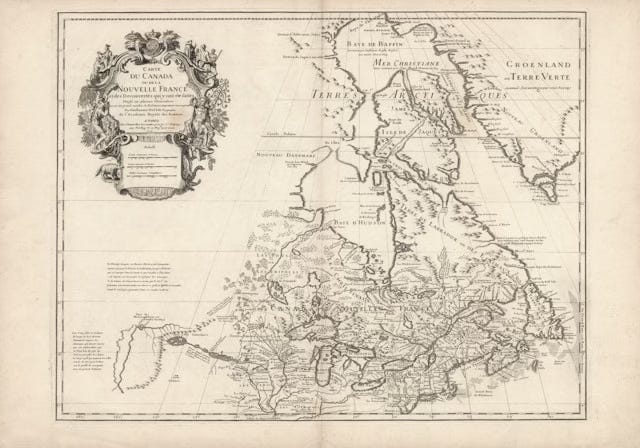
Too many founders treat the Business Model Canvas as a graduation requirement rather than a living strategic tool. They complete the exercise as they pass through an accelerator programme, then file it away and assume the hard thinking is done. This creates a dangerous blind spot that can derail your scaling journey before it gains real momentum. In today’s fast-changing economy, static business models don’t just stagnate; they decay. When was the last time you actually looked at yours?
The Canvas gathering dust in your files was designed for a different company at a different stage solving different problems. What got you to your first million won’t get you to ten. What drives growth to ten won’t engineer profitability at fifty. Your business model must evolve, or it will quietly sabotage everything you’re trying to build.
The Three Horizons of Business Model Evolution
Your Business Model Canvas isn’t a document. It’s a living framework that must evolve through the three distinct stages or “horizons” of scaling. Each horizon requires a fundamentally different strategic focus and corresponding tactical adjustments. Understanding these horizons can transform how you approach growth and help you navigate the inherent unpredictability of building a venture that lasts.
Horizon One: Establishing Credibility
The first horizon centers on validation and foundation-building as you enter the market and secure your initial sales. At this stage, you obsess over the Customer Segments and Value Proposition panels of the Canvas, working to establish genuine problem-solution fit. You need to secure the Key Resources necessary to support your search and deliver on your promises.
This stage demands ruthless focus. You’re testing core assumptions and continuously refining your model based on what you learn from early customers. Every conversation, every demo, every lost deal teaches you something about whether you’ve identified a real problem worth solving. The Credibility horizon typically extends until you reach the $1 million per year revenue threshold, which may feel like you’re hit the big time, but is only a proof point which demonstrates that customers see enough value in your offer to actually pay for what you’re building.
Horizon Two: Building Capability
Once you cross into the second horizon, your Canvas undergoes a fundamental transformation. The central question evolves from “Do people want this?” to “How do we systematically acquire, retain, and grow our customer base?” Your attention must shift toward Customer Relationships, Channels, and Key Partnerships as you search for true product-market fit.
This transition trips up many founders because what worked in Credibility often becomes a bottleneck in Capability. The scrappy sales approach that landed your first twenty customers won’t scale to two hundred. The manual onboarding process that felt personal starts costing you deals. Your business model must adapt to support repeatable, scalable processes, often requiring fundamental changes to the operations described in your Key Activities panel.
Successfully navigating this horizon should take you to approximately $5 to $7 million in annual revenue. But here’s what most founders miss: achieving this milestone doesn’t mean you’ve figured out your business model once and for all. It means you’re ready for the hardest evolution yet.
Horizon Three: Engineering Cashflow
The third horizon presents the ultimate test of your business model’s evolution. Here, your task shifts to engineering your Revenue Streams and Cost Structure to discover your true Profit Proposition: how to scale your margins faster than revenue growth while simultaneously delivering more value to customers and reducing costs. At this stage, you’re pursuing what Blue Ocean Strategy calls Value Innovation, making the competition irrelevant by creating uncontested market space.
Many promising startups stumble at this stage because they’re still operating with assumptions inherited from earlier horizons. They never question their original pricing model, cost structure, or operational efficiency. They assume that if they just grow revenue fast enough, profitability will magically appear. It won’t. Without deliberately evolving your model to engineer positive unit economics and sustainable cash flow, growth just accelerates your path to running out of money.
The Real Challenge: Success Demands Reinvention
Growth doesn’t come from merely accelerating the execution of your initial business model. It comes from evolving that model as you validate or invalidate the assumptions that drove your initial idea.
The business model that gets you started won’t get you scaled, and the one that drives scale won’t sustain profit. Each horizon forces you to unlearn what once worked. That’s the real challenge of growth: not execution, but reinvention. The best founders don’t spend their time polishing their old Canvas. Instead, they redraw it again and again to match a quickly evolving market, transforming their map into a more complete, detailed, and insightful picture of the territory they’re actually navigating.
Through years of coaching founders, I’ve observed a consistent pattern: technology may scale exponentially, but business models require deliberate evolution through each horizon. The founders who win aren’t necessarily the ones with the best initial insight. They’re the ones willing to constantly redraw their maps as they discover new territory.
Your Strategic Map for the Journey Ahead
Think of your Business Model Canvas as a strategic map that should become more detailed and accurate with each kilometre traveled. In Credibility, you’re sketching rough outlines, testing whether the terrain matches your assumptions. In Capability, you’re filling in the routes and infrastructure needed to move efficiently through known territory. In Cashflow, you’re optimizing the entire system to maximize value creation while minimizing costs.
Pull out your Business Model Canvas this week. Really look at it. Better yet, start redrawing it. Which horizon are you in? Which panels demand your attention right now? What assumptions from earlier stages are holding you back?
Let your evolving Canvas serve as your strategic map as you scale, guiding you from validation through growth toward the ultimate win: engineering sustainable profitability. The map that got you here won’t get you there. Time to start redrawing.
This rewrite of a previous Substack is the core idea of Chapter 10 - Leveraging your Business Model, of my book project “Momentum Scaling - How To Successfully Grow A Technology Venture In An Unpredictable World“.
I am currently racing to finish my manuscript, which provides practical tools, frameworks, and real-world examples to guide you in making sound and strategic growth decisions in an unpredictable world.
I appreciate your feedback on these ideas.
Subscribe to my Substack to be notified of other excerpts. The book’s target release date is Spring 2026.
Davender’s passion is to guide innovative entrepreneurs in developing the clarity, commitment, confidence and courage to enter, engage and lead their markets in an unpredictable world by thinking strategically and acting tactically. Find out more at https://www.davender.com and https://linkedin.com/in/coachdavender .